
Introduction
In this guide to how laser hair removal works, Laser hair removal (LHR) has become a sought-after beauty treatment, providing a lasting solution for unwanted hair. Thanks to technological advancements, this procedure is now both effective and widely available, particularly for women in South Yorkshire. In this article, we’ll delve into how LHR operates, the science behind it, and what you need to know to prepare for your appointment.
At a glance
- Laser hair removal targets hair follicles with concentrated light.
- The procedure is fairly quick and can effectively treat larger areas.
- Its efficacy is highest during the hair’s growth phase.
- Multiple sessions are generally necessary for optimal results.
- Post-treatment care is crucial for the best outcomes.
- Grasping the costs can help you manage your finances more effectively.
How Does Laser Hair Removal Work?
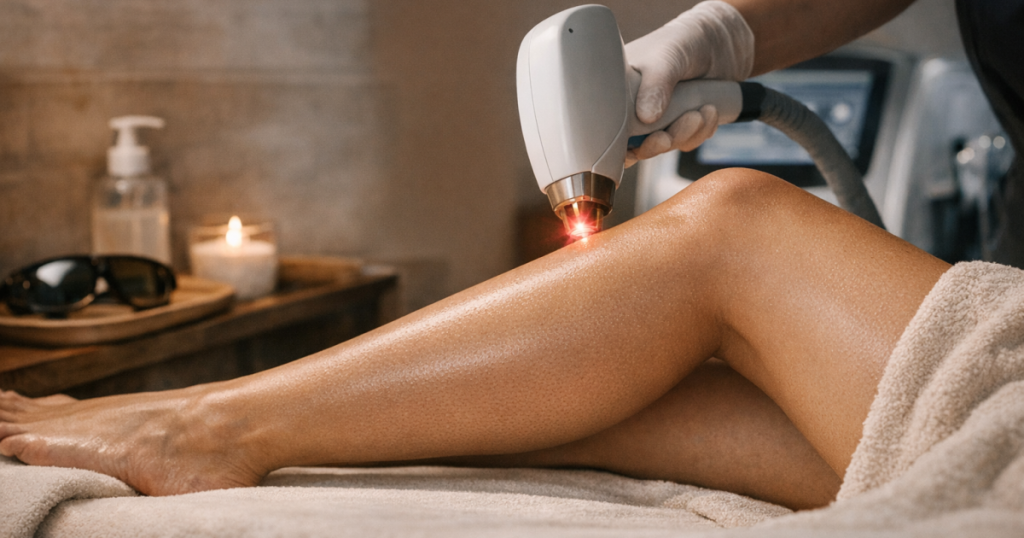
This treatment functions by emitting a focused beam of light that the pigment (melanin) in the hair absorbs. This technique, called selective photothermolysis, damages the hair follicle without harming the surrounding skin. The laser’s energy converts to heat, effectively inhibiting hair growth.
The process takes place in several stages:
- Consultation: A skilled technician will evaluate your skin type and hair colour to identify the most appropriate laser settings.
- Preparation: You’ll need to trim the hair and cleanse the treatment area prior to your session.
- Application: A handheld device is used to deliver laser light precisely to the targeted area.
- Post-treatment: This step involves cooling the area and providing specific aftercare instructions.
What to Expect During Your First Laser Hair Removal Session
Your first session is a valuable chance to familiarise yourself with the procedure. You might feel a brief sensation similar to a rubber band snapping against your skin, but this is generally mild and manageable. If you’re particularly concerned about discomfort, discussing numbing cream options with your technician could be worthwhile.
Question
What should I do to prepare for my appointment?
It’s best to shave the treatment area beforehand so the laser can directly target the hair follicle. Additionally, try to avoid sun exposure and certain medications that may heighten photosensitivity.
Question
How many sessions are needed for best results?
On average, clients typically need between 6 to 8 sessions for the best results, as hair growth occurs in cycles. For more detailed information, take a look at our article on how many laser hair removal sessions are needed for permanent results.
Question
Can laser hair removal help with PCOS symptoms?
Absolutely, laser hair removal can be quite beneficial for those experiencing PCOS by significantly reducing excessive hair growth. Further details can be found in our guide on how laser hair removal can help with PCOS symptoms.
Key takeaways
- Laser hair removal is safe when carried out by a trained professional. (especially for how laser hair removal works)
- Its effectiveness depends on individual hair and skin types.
- Proper aftercare enhances the results of the treatment.
- Understanding the costs involved with the procedure is crucial for effective planning.
Post-Treatment Care for Optimal Results
Caring for your skin after treatment is vital for achieving the best possible results. It’s common to experience some redness or mild swelling post-session, but these symptoms usually fade quickly. Avoiding sun exposure and heat treatments, such as saunas, is important during your recovery period.
You might want to consider using a soothing aloe vera gel to calm the skin and alleviate irritation. Moreover, keeping the area moisturised with a gentle, fragrance-free lotion can support healing and enhance comfort.
Avoiding strenuous exercise immediately after treatment is advisable, as activities that cause excessive sweating could irritate the skin and impact the healing process. If you feel the need to exercise, opt for gentler activities like walking or yoga for the first few days.
Many clients also worry about the possibility of ingrown hairs following treatment. To help prevent this, gently exfoliating the area once the skin has completely healed can be beneficial. A chemical exfoliant like a glycolic acid wash is effective in keeping pores clear.
If you’re considering at-home hair removal methods alongside your laser sessions, it’s wise to consult your technician first. Some methods, such as waxing or plucking, can disrupt the effectiveness of your laser treatments, while trimming or shaving may be acceptable for maintaining the area between sessions.
- Always use a broad-spectrum sunscreen with at least SPF 30 on treated areas to protect against changes in pigmentation.
- Steer clear of harsh soaps, fragrances, and alcohol-based products while your skin is healing.
- Keep to your follow-up appointments as your practitioner recommends to ensure you’re on track for the best results.
Related reading
- Common Myths About Laser Hair Removal Debunked
- Strawberry Skin: Causes and How Laser Treatment Can Help
- Comparing Traditional Hair Removal Methods to Laser Hair Removal
